Every tradition has a door. But no tradition owns the sacred.
This is something that took me years to say aloud, and even longer to fully believe — not because the idea was obscure, but because we are trained so thoroughly from birth to locate spiritual authority outside ourselves. In a book. In a lineage. In an institution. In the approval of someone deemed qualified to tell us whether our experience of the sacred is real.
The non-dogmatic path begins with a single, radical premise: that your direct experience of something larger, deeper, and more real than your ordinary self is not dependent on any tradition's endorsement. It was not given to you by any tradition. And it cannot be taken from you by any tradition, either.
What Non-Dogmatic Means — and Doesn't
Non-dogmatic does not mean anti-tradition. This is a crucial distinction. Traditions carry wisdom. They carry thousands of years of human beings working seriously with the same deep questions you are working with now — refining language, developing frameworks, passing down what actually helped people live and die with meaning. That is precious and worth engaging with.
What it means is that you do not give any tradition the final word on your own experience. You use it as a teacher, not as an owner. You take what illuminates, what deepens, what opens rather than closes — and you hold it lightly, remaining willing to set it down if it stops serving the actual living of your life.
"A framework is a map. The territory is your living experience. Never let a map tell you that what you are standing in doesn't exist."
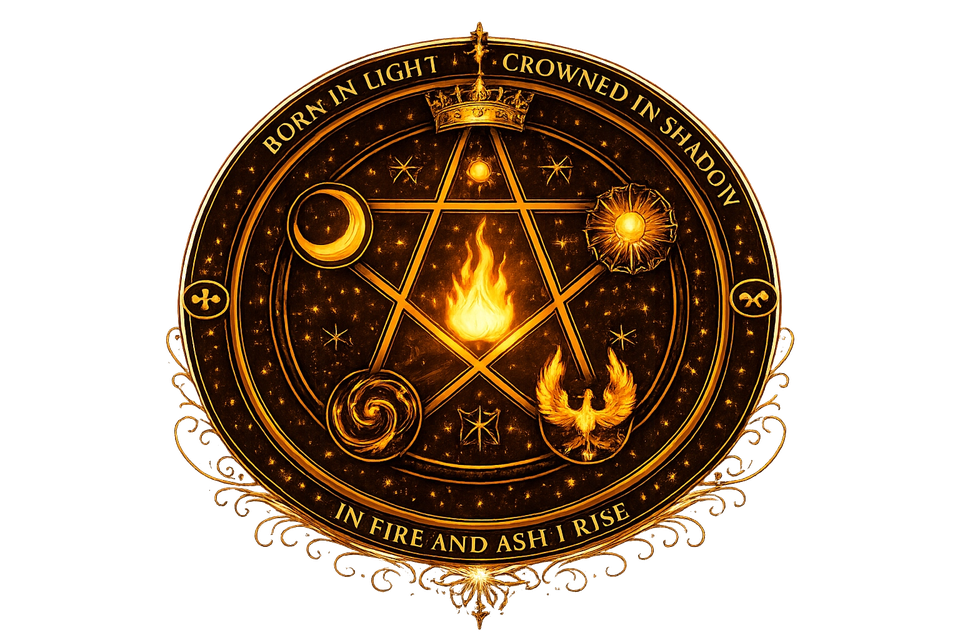
The Eternal Flame path draws from many streams: the wisdom traditions of multiple cultures, the findings of modern psychology and neuroscience, the somatic knowledge held in the body, the living intelligence of symbol and dream and natural world. None of these streams is the whole river. All of them, together, offer vocabulary for something that ultimately exceeds all vocabulary.
The Danger of Belonging Too Completely
There is a particular kind of spiritual surrender that looks like devotion but functions as abdication. When we give a tradition or teacher total authority over our inner life — when we stop asking our own questions, stop trusting our own sensing, stop being willing to notice when something isn't quite right — we are not deepening our spiritual life. We are outsourcing it.
This pattern is everywhere. It shows up in religious institutions that demand total doctrinal compliance. In spiritual communities that subtly punish deviation from the approved worldview. In relationships with teachers who cannot tolerate students who grow beyond them. In online spaces where belonging requires performing the correct beliefs in the correct language.
The cost is always the same: the slow erosion of the very faculty that makes real spiritual work possible — the capacity for direct, honest, personal discernment. Your ability to sense, from inside your own experience, what is true and what is not. What serves your deepest unfolding and what is simply a comfortable arrangement.
Building a Path That Is Genuinely Yours
A living, non-dogmatic path is not built once and then maintained. It is rebuilt, slowly and continuously, as you change — as your understanding deepens, as experiences accumulate, as the questions you carry evolve into forms you could not have predicted.
It requires a particular kind of intellectual and spiritual courage: the willingness to say "I don't know" in the presence of traditions that claim certainty. The willingness to say "this no longer fits me" even when you have invested years in a particular framework. The willingness, above all, to trust your own knowing — not as infallible, but as the most direct access you have to your actual experience.
The Atlas was built to offer structures, languages, and frameworks that can serve the living of your specific life — not to give you a new box to live in. Every constellation in the system, every book, every practice is offered as a tool, not a cage. Take what serves you. Leave the rest. Build something that is genuinely, irreducibly, yours.
That is the only path that can sustain a lifetime of real practice.