There is a version of spiritual practice that is fundamentally about protection — finding the right system, the right beliefs, the right community to build walls between yourself and the uncertainty of lived experience. This version of practice is very common. It offers real comfort. But it is not the path of transformation.
Transformation is not comfortable. Not primarily. It involves the actual dissolution of what you were — or at least of what you thought you were — so that something more true can emerge. This dissolution is not metaphorical. It is the actual experience of having your identity challenged at its foundations, your certainties destabilized, your carefully constructed sense of self called into question by experience that does not fit the story you were living inside.
The Path of the Eternal Flame is the choice to engage this process deliberately, with awareness and intention, rather than simply surviving it as it happens — as it will happen regardless, because transformation is the nature of living in a body in time.
What "The Eternal Flame" Names
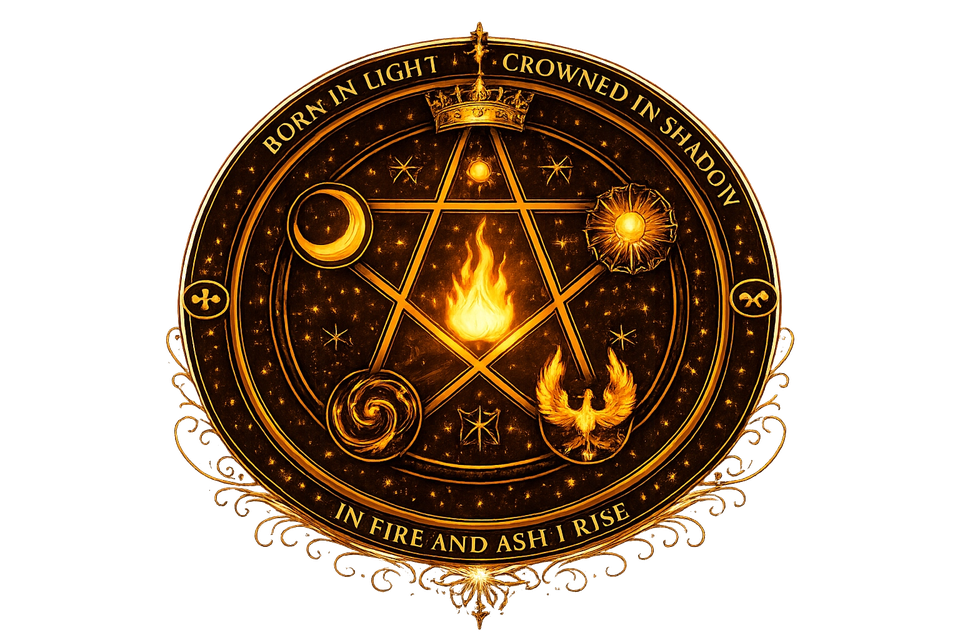
The Eternal Flame is not a symbol of relentless burning. It is a symbol of something that cannot be extinguished — the core of consciousness itself, the essential self that persists through every transformation, every loss, every collapse of the structures built around it.
In alchemy, fire purifies by consuming what is not essential. What is left after the burning is the true substance — the gold that was always there, hidden in the lead. The path of the Eternal Flame works the same way: it invites you, again and again, to let the inessential burn. Not through self-destruction or reckless dismantling, but through the honest, consistent practice of asking: is this true? Is this mine? Is this what remains when I strip away what was given to me by conditioning, by fear, by others' needs and expectations?
"What the Eternal Flame names is not a fire that consumes you. It is the fire you are — the one that has been burning since before you had words for it, and that no darkness has ever been able to put out."
The Phoenix Principle
The phoenix archetype appears across cultures not because it is a universal symbol of optimism, but because it describes something real about the nature of deep transformation: genuine renewal requires genuine death. Not literal death — but the willingness to let something that was "you" actually end, rather than clinging to it past its natural conclusion.
Most of us experience this as loss before we experience it as liberation. The end of a relationship or identity that held us for years. The collapse of a belief system that organized our world. The forced ending of a life chapter through illness, circumstance, or the simple accumulation of too much truth to deny. In the moment, this does not feel like transformation. It feels like destruction.
The distinction that changes the experience — not in the moment, but in what you make of it afterward — is whether you face it as something happening to you, or as something your deepest self is moving through. Whether the fire finds you unprepared, or whether you have been, through sustained practice, building the capacity to be present within it.
The Practice of Choosing
Walking the path of transformation does not mean seeking suffering or manufacturing crisis. It means something subtler and more continuous: the ongoing choice to remain in honest relationship with what is actually happening in your life, rather than managing it from behind the safety of denial, distraction, or performance.
It means, when you notice that something is not working — a pattern that keeps recurring, a relationship that has calcified, a belief that no longer holds — being willing to look at it directly rather than deflecting. Not immediately, not recklessly, but with the slow, sustained honesty that is the actual currency of transformation.
The Eternal Flame is not lit for you by a tradition or a teacher. It was lit in you before you arrived here. What the path offers is the language, the structure, and the community to walk toward it — and to trust, in the burning moments, that what remains will be worth what it cost to arrive there.